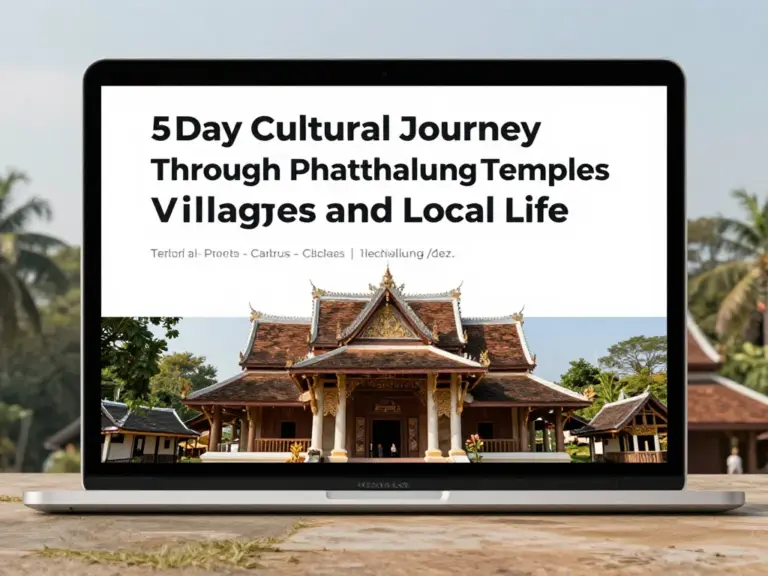
A 5-Day Cultural Itinerary in Phatthalung: Temples, Villages, and Local Life
Phatthalung, often overshadowed by its more famous neighbors like Krabi or Phuket, remains one of Thailand’s most authentic hidden gems. For travelers seeking a slower pace and genuine connection with local traditions, this cultural itinerary in Phatthalung offers a perfect deep dive into the heart of Southern Thailand. Over five days, you will traverse ancient temple grounds, engage with artisan village communities, and witness a way of life that has remained unchanged for generations.
cultural itinerary in Phatthalung: The Appeal of Phatthalung
Unlike the bustling tourist hubs, Phatthalung is defined by its dramatic karst mountains, vast wetlands, and deeply spiritual atmosphere. It is the birthplace of Nora, a traditional Southern Thai dance-drama, and is famously home to the Thale Noi Waterbird Park. When you plan a cultural itinerary in Phatthalung, you aren’t just checking off landmarks; you are immersing yourself in the rhythm of the Talay Noi lake and the quiet devotion of local temple communities.
5-Day Itinerary Overview
This itinerary balances exploration with relaxation, ensuring you see the highlights without rushing.
| Day | Focus | Key Activity |
|---|---|---|
| 1 | Arrival & Orientation | Explore Phatthalung Town & Wat Khuha Sawan |
| 2 | Wetlands & Wildlife | Thale Noi Waterbird Park Boat Trip |
| 3 | Crafts & Community | Ban Pak Pra Fishing Village |
| 4 | Spiritual Heritage | Wat Bang Kaew & Local Markets |
| 5 | Departure | Local coffee shops & souvenir hunting |
Detailed Daily Breakdown
Day 1: Arrival and Temple Exploration
Start your journey in Phatthalung town. Visit Wat Khuha Sawan, the most significant temple in the province, built into a limestone cave. The interior houses historical Buddha images and offers a cool retreat from the tropical heat. Spend your afternoon walking through the local markets to sample Khao Yam (Southern Thai rice salad).
Day 2: The Thale Noi Ecosystem
No trip to Phatthalung is complete without visiting Thale Noi Waterbird Park. Wake up early—around 6:00 AM—to take a long-tail boat ride through the lotus fields. This is when the birds are most active and the water lilies are in full bloom. You will see water buffalo grazing in the marshlands, a unique sight specific to this region.
Day 3: Village Life at Ban Pak Pra
Head to the Ban Pak Pra area. This fishing village is famous for its unique ‘yor’ (giant dip nets). Watching the local fishermen lower and raise these nets against the backdrop of a sunset is one of the most iconic experiences in the province. It’s an excellent opportunity for photography and learning about traditional sustainable fishing methods.
Day 4: Spiritual Heritage and Local Crafts
Visit Wat Bang Kaew, known for its intricate murals and historical significance. After the temple visit, spend your afternoon engaging with local craftspeople. Phatthalung is known for its Krajood (bulrush) weaving. You can visit local cooperatives to watch how artisans turn these reeds into beautiful, durable bags and home decor items.
Practical Checklist for Your Trip
- Transportation: Renting a car or hiring a local driver is highly recommended, as public transport between rural sites is limited.
- Attire: Always carry a sarong or scarf to cover your shoulders and knees when visiting temples.
- Sun Protection: The wetlands have little shade; bring a wide-brimmed hat, sunscreen, and sunglasses.
- Cash: While major towns have ATMs, rural villages operate primarily on cash.
Conclusion
A cultural itinerary in Phatthalung provides a rare window into the soul of Southern Thailand. By stepping off the beaten path, you gain more than just photos; you gain an appreciation for the conservation of nature and the preservation of ancient crafts. Whether you are navigating the lotus-filled waters of Thale Noi or sitting quietly in the cave of Wat Khuha Sawan, Phatthalung promises a transformative travel experience.
Frequently Asked Questions (FAQ)
What is the best time of year to visit Phatthalung?
The best time to visit is during the dry season, from December to April. If you specifically want to see the lotus flowers in full bloom at Thale Noi, the peak season is between February and April.
Is Phatthalung suitable for solo travelers?
Yes, Phatthalung is safe and welcoming. However, because it is less tourist-oriented, knowing a few basic Thai phrases or having a translation app will be very helpful as English proficiency is lower in rural areas.
How do I get to Phatthalung?
The most convenient way is to fly into Hat Yai International Airport and rent a car, or take a train from Bangkok or other southern provinces directly to Phatthalung Railway Station.
Are there any specific cultural etiquette rules?
Standard Thai cultural etiquette applies: dress modestly in temples, remove your shoes before entering buildings, and avoid touching people on the head. Always show respect to monks and elders.