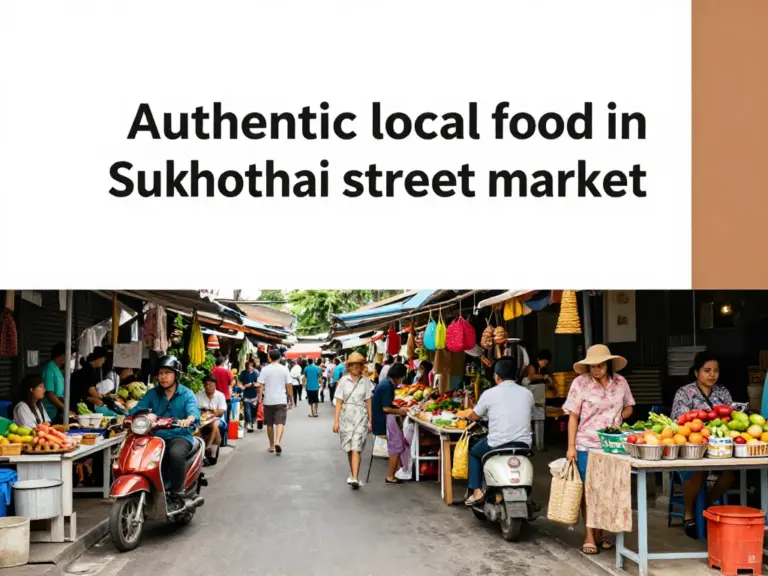
Where to Eat Authentic Local Food in Sukhothai
When travelers visit the historic kingdom of Sukhothai, they often focus exclusively on the ancient ruins and the UNESCO World Heritage site. However, those who look deeper will find that the province offers a distinct culinary identity. Finding authentic local food in Sukhothai requires understanding that this region has a flavor profile quite different from the spicy curries of the South or the sticky-rice-heavy diet of the Northeast. The local cuisine here is defined by balance, fresh ingredients, and a specific preparation method for noodles that has become the city’s signature dish.
In this guide, we will break down the best places to eat, the dishes you cannot miss, and the cultural context behind the flavors. Whether you are exploring the Old City or the more modern, bustling New City, this guide will ensure you avoid tourist traps and find the genuine, home-cooked experiences that define Sukhothai’s gastronomic landscape.
Understanding Authentic Local Food in Sukhothai
To appreciate authentic local food in Sukhothai, one must first recognize that the “Sukhothai style” is not merely a recipe; it is a philosophy of preparation. Unlike Bangkok, where dishes are often heavily influenced by fusion or international tastes, Sukhothai cuisine remains rooted in historical preparation techniques. The hallmark of this region is the use of specific condiments—crushed peanuts, blanched long beans, crispy pork rind, and a hint of lime—that transform a simple bowl of noodles into a complex culinary experience.
Authenticity in this region is often found in the most humble settings. You are less likely to find high-end dining experiences and more likely to find family-run shophouses that have been in business for decades. These establishments operate on a simple model: one or two signature dishes, fresh local ingredients sourced from the morning market, and a relentless consistency in broth preparation. When seeking authentic food, prioritize locations where the menu is limited, as this usually indicates a dedication to perfecting a specific craft rather than offering a broad, diluted menu.
Old City vs. New City: Where to Search
Sukhothai is geographically divided into two main areas: the Old City (near the Historical Park) and the New City (the administrative and residential center). Each offers a different dining dynamic for the curious food enthusiast.
The Old City (Historical Park Vicinity)
The Old City is highly convenient for those spending their days cycling through the ruins. Many restaurants here cater to tourists, but there are gems that maintain local integrity. Look for eateries located slightly away from the main park entrance. Restaurants situated along the main road leading to the park often provide a more “curated” version of local dishes, which can be a great entry point for those new to the cuisine. The prices here are slightly higher, but you gain the benefit of a scenic atmosphere, often overlooking ponds or greenery that define the landscape of the ancient capital.
The New City (Urban Center)
If you are looking for the most authentic local food in Sukhothai, the New City is your destination. This is where the local population eats daily. Head to the night markets or the shophouse districts near the Yom River. Here, you will find vendors who have been serving the same recipes for generations. The atmosphere is loud, energetic, and unapologetically local. It is here that you will find the best “Kuay Tiew Sukhothai” (Sukhothai Noodles), where the broth is simmered for hours and the chili paste is made in-house.
Must-Try Dishes for the Culinary Explorer
To truly experience the region, you must move beyond standard Thai dishes like Pad Kra Pao. Focus your attention on these regional specialties:
- Kuay Tiew Sukhothai (Sukhothai Noodles): The undisputed king of local food. It consists of rice noodles, sliced pork, pork offal, long beans, and bean sprouts, all topped with a signature chili-lime dressing. It is often served dry or in a light, flavorful broth.
- Phad Thai Sukhothai: Distinctly different from the version found in Bangkok. It is rarely served with shrimp or tofu but instead features ground pork and is often cooked with a slightly sweeter, more pungent sauce profile.
- Miang Kham: While found elsewhere, the local variation in Sukhothai often uses specific, locally grown leaves and a dipping sauce that highlights the region’s unique palm sugar production.
| Venue Type | Authenticity Level | Atmosphere | Price Point |
|---|---|---|---|
| Street Stall | High | Noisy, Crowded | $ |
| Family Shophouse | Very High | Simple, Traditional | $-$$ |
| Riverside Cafe | Moderate | Scenic, Relaxed | $$-$$$ |
Practical Checklist for Foodies
- Time Your Visit: Most authentic noodle shops open early in the morning and close by 3:00 PM or 4:00 PM. Do not expect to find these specialty shops open for dinner.
- Check the Condiments: Authentic Sukhothai noodles should come with specific condiments on the table, including dried chili flakes, sugar, fish sauce, and vinegar.
- Look for Crowds: A shop filled with locals during lunch hour is the most reliable indicator of quality.
- Cash is King: While digital payments are growing, small, authentic shophouses almost exclusively deal in cash.
Conclusion
Exploring the food of Sukhothai is as much a part of the cultural experience as visiting the temples. By focusing on the New City for authentic shophouse dining and understanding the nuances of the local noodle preparations, you can elevate your trip from a standard sightseeing tour to a genuine culinary journey. Remember that the best meals are often found in the simplest settings, and the true flavor of Sukhothai lies in its dedication to tradition and local ingredients.
Frequently Asked Questions (FAQ)
A: While the cuisine is heavily pork-based, you can ask for “jay” (vegetarian) versions of the noodles. However, be aware that the broth is traditionally pork-based, so vegan options may be limited to simple stir-fried vegetables.
A: It generally is not as spicy as Southern Thai food. Most dishes are seasoned to be well-balanced, and you can always adjust the spice level using the condiments provided at the table.
A: While English is spoken in tourist areas, having a translation app or pointing at the menu is perfectly acceptable in local shophouses. The shop owners are generally very accustomed to international visitors.
References
Tourism Authority of Thailand – Sukhothai Region
UNESCO World Heritage Centre – Historic Town of Sukhothai