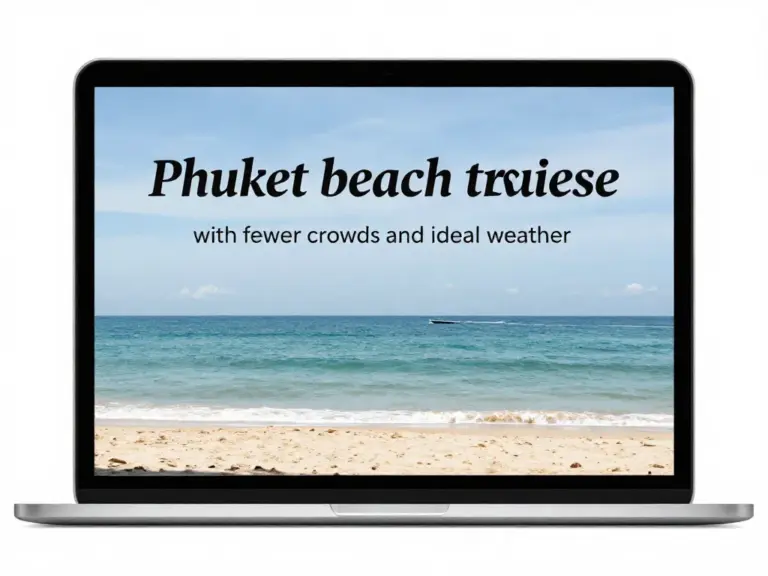
Best Time to Visit Phuket for Fewer Crowds and Better Weather
- Best Time to Visit Phuket for Fewer Crowds and Better Weather
- best time to visit Phuket for fewer crowds and better weather: Understanding Phuket’s Climate Patterns
- The Shoulder Seasons: Your Secret Weapon
- Comparing Phuket Seasons at a Glance
- Factors That Influence Your Travel Experience
- Checklist: Planning Your Off-Peak Trip
- Conclusion
- Frequently Asked Questions (FAQ)
Planning a trip to Thailand’s most famous island requires a delicate balance between avoiding the monsoon rains and escaping the overwhelming tourist peaks. Many travelers search for the best time to visit Phuket for fewer crowds and better weather, hoping to find that elusive sweet spot where the sun shines bright but the beaches aren’t packed shoulder-to-shoulder. While Phuket is a year-round destination, the island experiences distinct meteorological shifts that directly impact your travel experience, costs, and accessibility to local attractions.
best time to visit Phuket for fewer crowds and better weather: Understanding Phuket’s Climate Patterns
To master your timing, you must first understand the tropical monsoon climate that governs Phuket. The island generally operates on two primary seasons: the dry season and the wet season. The dry season, typically running from November to April, is characterized by clear blue skies, lower humidity, and calm seas, making it ideal for snorkeling and diving. However, this is also when the island sees its highest influx of international visitors.
Conversely, the wet season (or green season) occurs from May to October. While the term “wet” might deter some, it rarely means constant rain. Instead, you can expect short, intense tropical downpours followed by sunshine. The trade-off for carrying an umbrella is significantly lower hotel rates, lush green landscapes, and the chance to experience Phuket without navigating through massive tour groups.
The Shoulder Seasons: Your Secret Weapon
If you are looking for the absolute best time to visit Phuket for fewer crowds and better weather, look no further than the shoulder months. These transition periods—specifically early November and late April—offer the perfect compromise. During these times, the weather is usually transitioning into or out of the dry season, providing pleasant temperatures without the peak-season congestion.
Why Early November is a Winner
Early November provides a unique window. The monsoon rains are tapering off, the seas are becoming calmer, and the island is freshly groomed for the upcoming high season. You can secure luxury accommodations at a fraction of the price compared to December or January, and the popular beaches like Kata and Karon are significantly less crowded.
Why Late April is Often Overlooked
April is hot, but it marks the tail end of the dry season. As the month progresses, the crowds begin to thin out as families return home after the Easter holidays. If you can handle the heat, late April is a fantastic time to enjoy the island’s nightlife and beaches with more personal space.
Comparing Phuket Seasons at a Glance
| Season | Months | Weather | Crowd Level | Price Range |
|---|---|---|---|---|
| Peak Season | Dec – Feb | Dry, Sunny, Cool | Very High | $$$ |
| Hot Season | Mar – Apr | Very Hot, Dry | Moderate | $$ |
| Shoulder Season | May/Nov | Mixed, Pleasant | Low to Moderate | $ – $$ |
| Low Season | Jun – Oct | Rainy, Humid | Very Low | $ |
Factors That Influence Your Travel Experience
Beyond simple weather patterns, several factors can turn a good trip into a great one. Understanding these will help you refine your itinerary.
The Impact of Sea Conditions
If your primary goal is island hopping or diving, the sea state is more important than whether it rains. During the low season (especially July and August), the Andaman Sea can get quite choppy. This can lead to boat tours being canceled for safety reasons. If you are dead set on visiting the Similan Islands or Phi Phi Islands, aim for the dry season window.
Local Festivals and Events
Phuket comes alive during specific festivals like Songkran (Thai New Year) in mid-April and the Vegetarian Festival in autumn. While these are culturally fascinating, they attract massive crowds. If you want a quiet getaway, avoid travel dates that overlap with major national holidays.
Checklist: Planning Your Off-Peak Trip
If you have decided to travel during the shoulder or low season to avoid the masses, use this checklist to ensure you are prepared:
- Check the Marine Forecast: If you plan to take boats, monitor the Andaman Sea conditions, not just the weather forecast.
- Choose the Right Beach: Some beaches, like Nai Harn, are better protected during the monsoon season than others.
- Book Flexible Accommodation: Look for hotels that offer free cancellation, just in case of unexpected weather shifts.
- Pack for Humidity: Even in the dry season, Thailand is tropical. Bring breathable, moisture-wicking clothing.
- Explore Inland: If the weather turns, Phuket has plenty to offer away from the beach, such as Old Town architecture, museums, and cooking classes.
Conclusion
Finding the best time to visit Phuket for fewer crowds and better weather ultimately comes down to your personal priorities. If you are willing to trade a little bit of rain for significantly more solitude and lower costs, the shoulder months of May and November are your best bets. Conversely, if reliable sunshine is non-negotiable, you may have to accept the reality of sharing the island with other travelers during the peak season. By adjusting your expectations and planning around the monsoon cycles, you can enjoy all the natural beauty that Phuket has to offer regardless of when you choose to land.
Frequently Asked Questions (FAQ)
A: Not always. During the monsoon season (May to October), currents can be strong and waves high. Always look for the red flags on the beach; if they are up, do not enter the water.
A: Rarely. Most rain in Phuket comes in short, heavy bursts, often in the late afternoon or evening, leaving plenty of daylight hours for sightseeing.
A: September and October are typically the cheapest months, as these are the peak of the monsoon season and demand is at its lowest.
A: Most shops, restaurants, and museums are open year-round. However, some specific boat tours to outer islands may suspend operations during the peak monsoon months for safety.
References
Tourism Authority of Thailand Official Website
Thai Meteorological Department