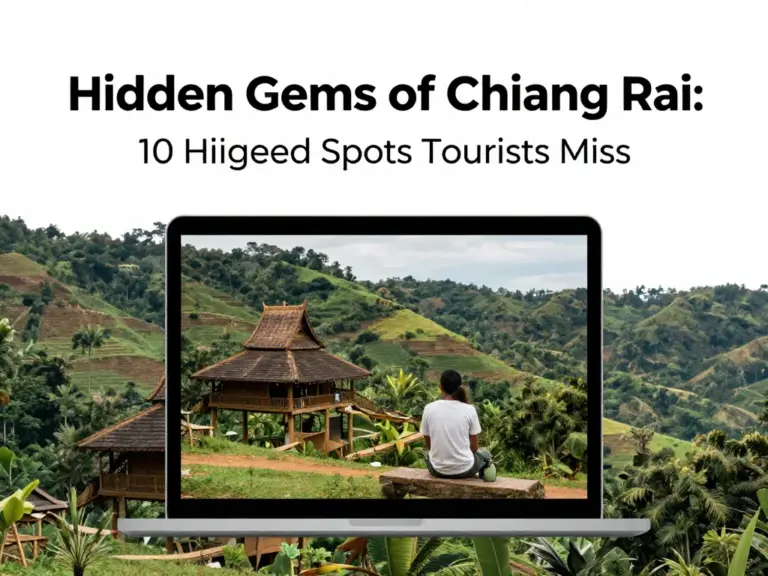
Hidden Gems in Chiang Rai: 10 Places Most Tourists Miss
While the White Temple and Blue Temple are undoubtedly stunning, they only scratch the surface of Northern Thailand’s cultural capital. If you are looking to escape the crowds and experience a more authentic side of the region, exploring the hidden gems in Chiang Rai is an essential part of your itinerary. Beyond the famous landmarks, there are quiet mountains, lesser-known ethnic villages, and serene landscapes waiting to be discovered.
Chiang Rai is often treated as a quick day trip from Chiang Mai, but it holds a depth that rewards travelers who slow down. The popular sites are fantastic, but they can feel rushed. By venturing into the less-visited corners of the province, you get the chance to interact with local communities, witness untouched nature, and find a sense of peace that is increasingly rare in major tourist hubs.
10 Secret Spots You Shouldn’t Miss
To help you plan your journey, here are 10 incredible locations that remain largely off the mainstream tourist radar.
1. Doi Pha Tang
Located on the border with Laos, this mountain offers one of the most spectacular sunrise views in Thailand. The limestone cliffs create a dramatic landscape that feels like a scene from a fantasy novel.
2. Phu Chi Dao
Often overshadowed by its neighbor, Phu Chi Fa, Phu Chi Dao offers a similar sea-of-mist experience with significantly fewer crowds. It requires a short hike but provides a much more intimate atmosphere.
3. Huai Mae Sai Waterfall
Hidden deep within the jungle, this multi-tiered waterfall is a refreshing escape. It is perfect for those who enjoy light trekking and want to cool off away from the city heat.
4. Mae Salong (Santikhiri)
This former settlement of the Kuomintang army is now a peaceful tea-growing region. The cool climate and Chinese-influenced culture make it feel like a different country entirely.
5. Khun Korn Waterfall
As the highest waterfall in the province, it is impressive, yet many day-trippers skip it. The hike through the bamboo forest is part of the charm.
6. Wat Phra That Chom Sak
For a panoramic view of the city without the crowds of the main temples, head to this hilltop sanctuary. It is a place of quiet reflection and stunning sunsets.
7. Singha Park Tea Plantations
While known, many visitors only stop at the entrance. Cycling through the vast tea fields and orchards provides a much more immersive experience than just taking a photo at the gate.
8. Tham Luang Cave
Famous for the dramatic 2018 rescue operation, the site now serves as a memorial and park. It is a somber but fascinating place to understand local history and resilience.
9. Ban Dam Museum (Black House)
While gaining popularity, it remains a surreal contrast to the White Temple. The dark, intricate architecture is a masterclass in Northern Thai artistic expression.
10. Chiang Saen Ancient City
Located by the Mekong River, the ruins here tell the story of the ancient Lanna Kingdom. It is a quiet, historical alternative to the bustling cities.
Comparison of Popular vs. Hidden Sites
| Site Type | Popular (e.g., White Temple) | Hidden Gem (e.g., Phu Chi Dao) |
|---|---|---|
| Crowd Levels | Very High | Low to Moderate |
| Atmosphere | Busy/Commercial | Quiet/Contemplative |
| Accessibility | Easy/Bus Access | Requires Rental Vehicle |
| Time Required | 1-2 Hours | Half to Full Day |
Practical Tips for Your Chiang Rai Adventure
- Rent a vehicle: A car offers the most flexibility for mountain roads.
- Respect the locals: When visiting villages, dress modestly and ask before taking photos.
- Check the weather: Mountain areas like Doi Pha Tang can get very cold at night, even in summer.
- Carry cash: Remote areas often do not accept credit cards.
- Start early: Many of these sites are best enjoyed in the morning light.
Conclusion
Chiang Rai is more than just a check-list of temples. By stepping away from the well-trodden paths, you gain a richer, more nuanced understanding of Northern Thailand. Whether you are trekking to a hidden waterfall or sipping tea on a misty mountain, these hidden gems in Chiang Rai offer memories that last far longer than a standard tourist snapshot.
Frequently Asked Questions (FAQ)
Generally, yes. However, remote mountain areas require basic navigation skills and a reliable vehicle. Always share your travel itinerary with your hotel staff.
Do I need a tour guide to visit these places?
While not strictly necessary for most, hiring a local guide can add significant value, especially when visiting ethnic villages or historical sites where context is helpful.
What is the best time of year to visit Northern Thailand?
The cool season (November to February) is the best time for outdoor activities, as the weather is pleasant and the morning mist in the mountains is at its peak.
Can I visit these spots by public transport?
Public transport in Chiang Rai is primarily focused on the main city and major towns. Reaching remote waterfalls or mountain peaks usually requires a private car, taxi, or motorbike rental.