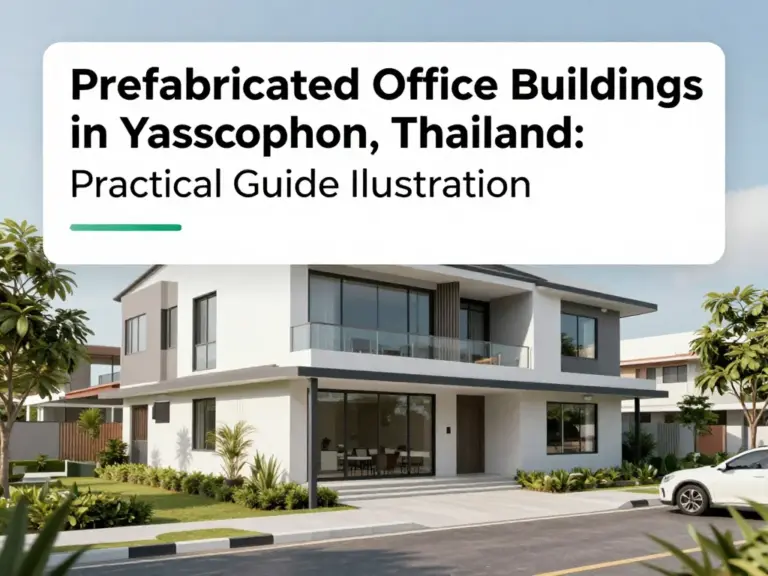
Prefabricated Office Buildings in Yasothon: A Practical Guide
- Prefabricated Office Buildings in Yasothon: A Practical Guide
- prefabricated office buildings in Yasothon: The Advantages of Prefabricated Construction in Isan
- Understanding the Prefabricated Building Process
- Comparing Construction Methods
- Checklist: Getting Started with Your Project
- Overcoming Challenges in Regional Construction
- Conclusion
- Frequently Asked Questions (FAQ)
For business owners and entrepreneurs in Yasothon, the need for efficient, scalable workspace is growing. As the province continues to develop, traditional construction methods are increasingly being challenged by modern alternatives. Prefabricated office buildings in Yasothon offer a compelling solution for those looking to establish a professional presence quickly without the delays and logistical headaches of conventional brick-and-mortar builds. By leveraging modular construction techniques, businesses can reduce downtime and optimize their capital expenditure significantly.
prefabricated office buildings in Yasothon: The Advantages of Prefabricated Construction in Isan
The climate and infrastructure in Yasothon present unique challenges for traditional construction. High heat, heavy monsoon rains, and rural logistics can stall projects for months. Prefabricated buildings are manufactured in controlled factory environments, shielding materials from weather damage and ensuring consistent quality control. This off-site construction approach means that the actual on-site assembly takes only a fraction of the time compared to traditional methods.
Understanding the Prefabricated Building Process
Transitioning to modular construction requires a shift in how you view the building lifecycle. Unlike traditional “stick-built” homes or offices, prefab structures rely on standardized modules that are transported to the site and assembled. The process generally follows four distinct phases: design and engineering, factory fabrication, site preparation, and final assembly.
Phase 1: Design and Engineering
Before any material is cut, every detail must be finalized. This phase is critical because modifications are difficult once production begins. Work with architects who understand modular constraints. They will ensure your Yasothon office meets local building codes and withstands regional environmental conditions.
Phase 2: Factory Fabrication
The modules are built in a factory. This controlled setting allows for precise measurements, reduced waste, and the use of high-quality insulation materials, which is crucial for maintaining a comfortable office climate in the hot Yasothon sun.
Phase 3: Site Preparation
While fabrication occurs, local contractors prepare the land. This includes clearing, leveling, and pouring the concrete foundation. Because prefab buildings are lighter than masonry structures, the foundation requirements may differ, potentially saving costs.
Comparing Construction Methods
Choosing between prefab and traditional construction depends on your specific business requirements. The table below highlights key differences to help you decide.
| Feature | Prefabricated Offices | Traditional Construction |
|---|---|---|
| Construction Speed | High (Weeks) | Low (Months) |
| Cost Predictability | High (Fixed Pricing) | Variable (Change orders) |
| Waste Generation | Minimal | High |
| Customization Flexibility | Moderate (Standardized) | High (Unlimited) |
| Resale Value | Variable | High |
Checklist: Getting Started with Your Project
If you are ready to proceed with prefabricated office buildings in Yasothon, follow this checklist to ensure you cover all necessary bases:
- Site Assessment: Ensure your land has proper access for heavy transport trucks to deliver modular units.
- Budgeting: Include costs for transportation, crane rental, and final utility hookups, not just the building price.
- Permits: Verify with the Yasothon local administration office regarding building permits for modular structures.
- Contractor Vetting: Ask for portfolios of previous projects in Isan to verify their experience with local terrain and climate.
- Climate Control: Discuss high-efficiency HVAC and insulation options early in the design phase.
Overcoming Challenges in Regional Construction
While prefab offers significant benefits, it is not without challenges. Transportation logistics in rural areas can be complex. You must ensure that the roads leading to your Yasothon site can accommodate wide-load transport vehicles. Furthermore, while the structure is built off-site, you are still dependent on the timing of your on-site foundation work. Misalignment between the foundation completion and the delivery of the modules can lead to storage costs. Proactive project management is the best way to mitigate these risks.
Conclusion
Investing in prefabricated office buildings in Yasothon is a strategic move for businesses looking to prioritize efficiency and cost-control. By understanding the modular process—from design to final on-site installation—and carefully vetting your contractors, you can build a modern, durable, and functional workspace that serves your business needs for years to come. As the construction industry continues to evolve, prefab stands out as a reliable, future-proof choice for the Isan region.
Frequently Asked Questions (FAQ)
Q: Are prefabricated offices durable enough for the Yasothon climate?
A: Yes. Modern prefab buildings are engineered to meet strict structural standards. Proper insulation and high-quality exterior finishes ensure they are just as durable and comfortable as traditional buildings.
Q: Is it cheaper to build a prefab office than a traditional one?
A: Often, yes. While material costs might be similar, the significant reduction in labor hours, waste, and construction time usually results in lower overall project costs and faster occupancy.
Q: How long does the entire process take?
A: Depending on the complexity and size of your office, most prefab projects can be completed in 3 to 6 months, including design, manufacturing, and on-site assembly.
References
Department of Public Works and Town & Country Planning (Thailand)
International Organization for Standardization (Modular Construction Standards)